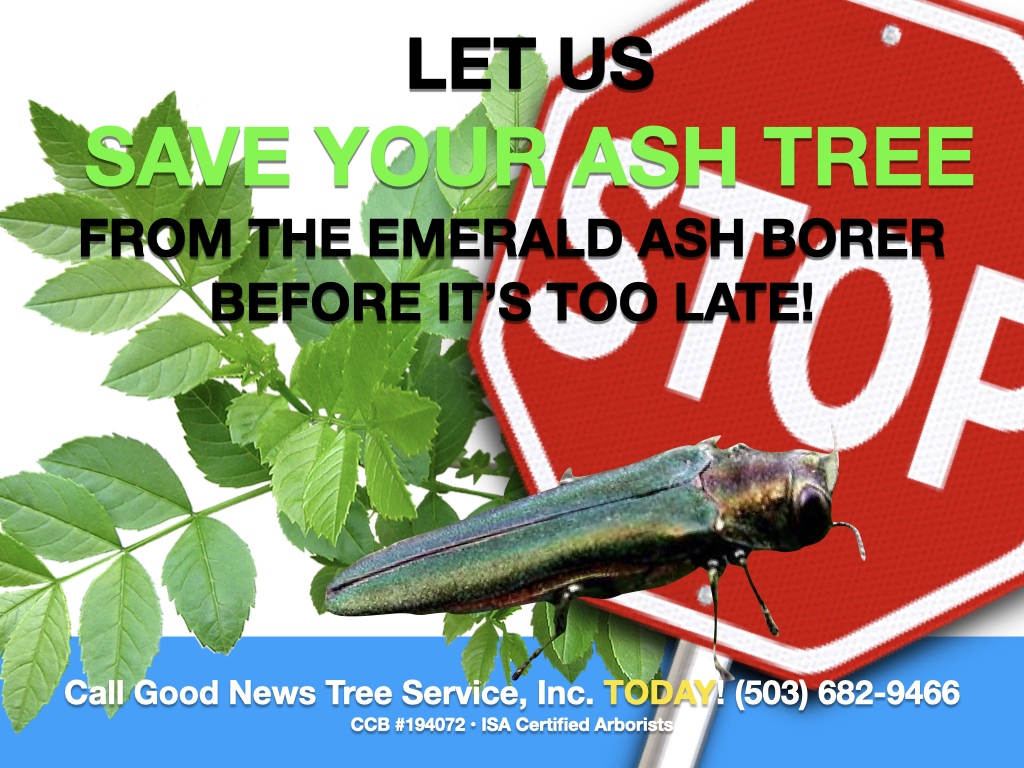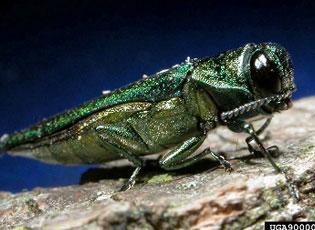
If you are reading this, then you most likely have been awakened to the threat of the emerald ash borer beetle (EAB) that has recently made its debut in the Portland region. This prolific and voracious beetle has already killed tens of millions of ash trees in the eastern U.S. since the early 2000s, and now it is in Oregon. What follows is an update on the status of this horrific, invasive pest that is likely to kill every untreated native and non-native ash tree in our region over the next several years according to State of Oregon authorities.
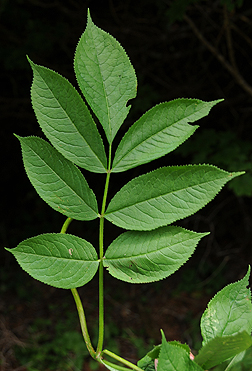
For the past several years, I have been monitoring the spread of the EAB, as it is commonly known, since it was first detected in Forest Grove in July 2023. In fact, Good News Tree Service, Inc. was the first local tree care company in the Pacific Northwest to put out informational videos on its YouTube channel on the EAB. Since then, the EAB has spread throughout the Portland tri-county metro area and south to Yamhill and Marion counties.
We have yet to witness wide-spread tree mortality among this region’s ash trees because it typically takes two to three years from the time the EAB enters a tree to the time limbs begin to die one-by-one on the tree. Thus, the Oregon Department of Forestry is expecting to see greater numbers of ash trees dying over the next several years. Personally I have viewed large patches of dead native Oregon white ash trees along the Tualatin River between Hillsboro and Scholls as well as in the Canby area, so like a horror movie, the EAB is coming to a theater near you.
The question then is if you have an ash tree on your property that you do not want to lose, when should you treat it? Glad you asked. As with everything in life, prevention is always the best medicine, and since it is impossible to tell if your tree has been infested with the EAB or not, the sooner you treat it the better. Signs of EAB in your tree include woodpecker holes, large dead branches and small capital D-shaped holes in the trunk or branches.
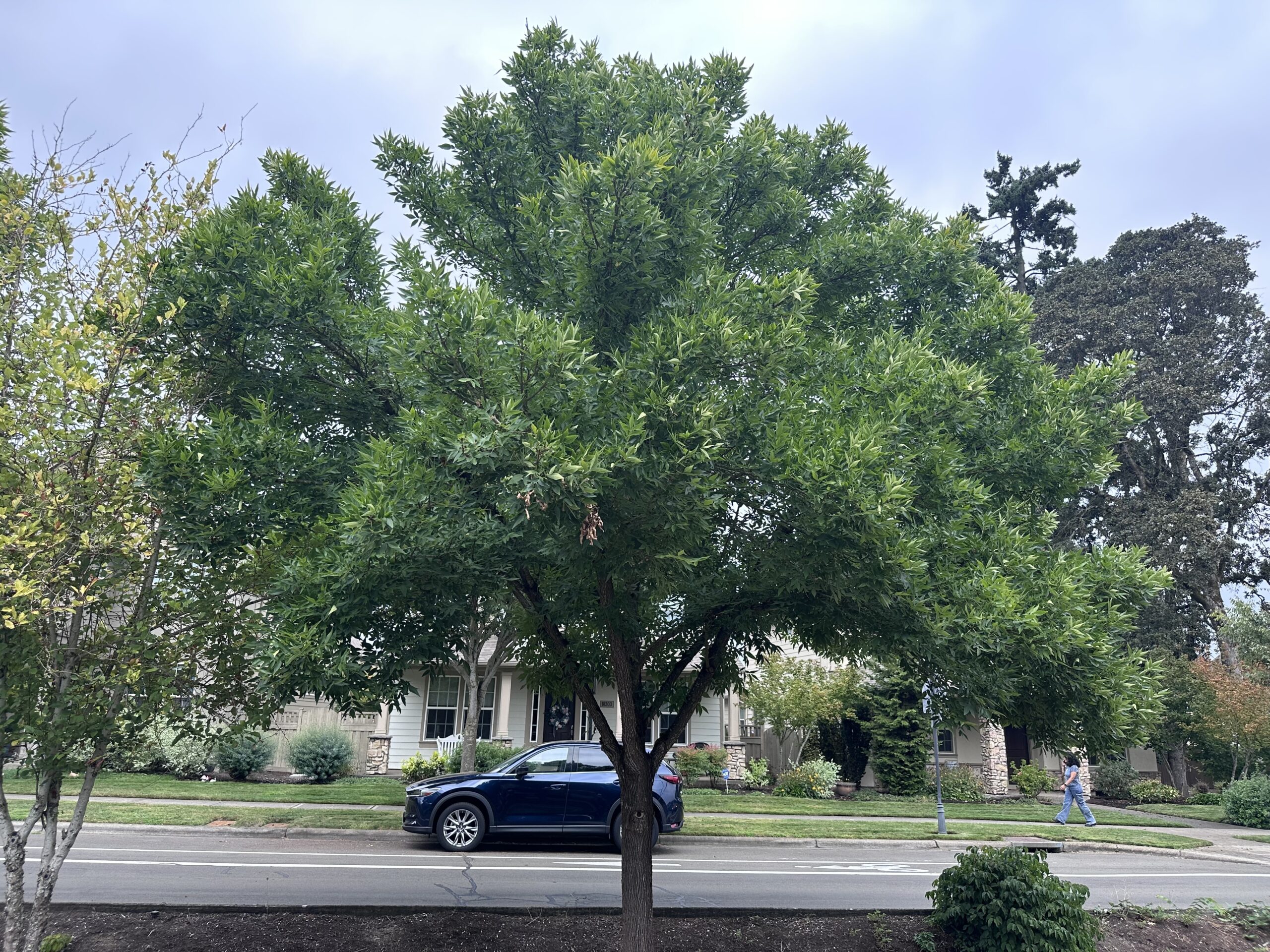
The next question is how can the trees be treated and how effective are the treatments? It is true that homeowners can purchase pesticides from their local garden center that will kill the EAB, but these treatments are iffy at best with mixed results. It’s a gamble. This is because a state licensed professional arborist (like Good News Tree Service, Inc.) is legally authorized to purchase and apply chemical that are much more potent than what a homeowner can buy. Moreover, we inject the trees intravenously, if you will, by inserting a hypodermic-type needle directly into the tree’s vascular system and injecting it with a systemic pesticide that then translocates through the entire tree. Subsequently, when the EAB grub starts eating into the tree, it is poisoned to death. What’s more, the equipment to administer this lethal dose of insecticide typically costs $3,000 or more plus the expense of the pesticide. The good news is that a tree can go for two to three years between treatments, and the treatments are 99 percent effective as long as the tree is no more than 30 percent defoliated. The bad news is that the tree will need to be treated for the rest of its life.
Although the trees can be treated any time of the year as long as the soil is moist, the most effective time is when the leaves are on the tree so that the insecticide can get into the leaves. Although the beetles mostly chew into the wood, sometimes after adult beetles hatch they will feed on the leaves before they fly to another tree to lay their eggs, according to a recent conversation I had with Christine Buhl, staff entomologist with the Oregon Department of Forestry (ODF). Thus the sooner in the spring after foliation occurs that one treats their trees the better, so that the insecticide has a chance to get into the tree before the beetles hatch and begin chewing on the wood.
The cost to treat a tree depends on its size, but typically will cost several hundred dollars per tree. The ODF has calculated that a mature ash street tree, for example, can be treated for 20 to 30 years for the cost of removing and replacing it including the loss of monetary value that a large tree adds to one’s property.
In conclusion, if you have a high value ash tree that is important to your landscape, shades your house or is a city-mandated street tree, the sooner you treat it the better. By waiting too long, one risks the chance of branches or whole trunks dying and then falling and potentially damaging property (e.g., buildings and vehicles), not to mention the expense of having to hire a tree service to prune out the dead branches.