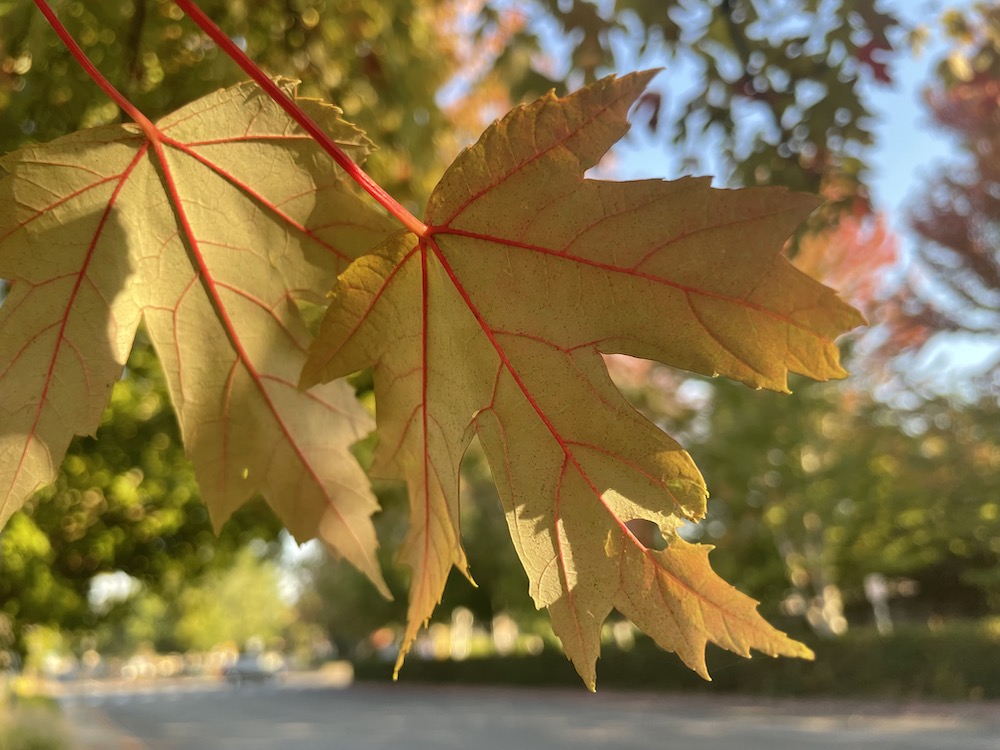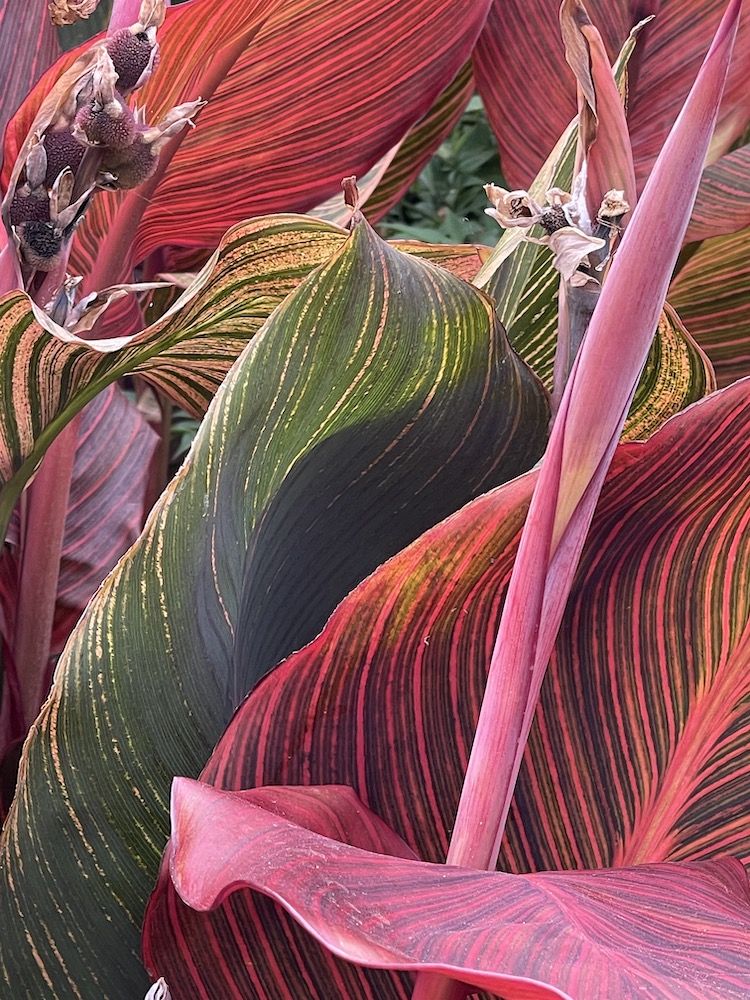
October in the Garden—A To Do List

This guide is tailored for the western valleys of Oregon and Washington. 

YOU can help to make the world a better, a more friendly, loving and beautiful place by being a good steward of the spot on this earth that you are privileged to be borrowing for a time—your garden. Nathan, the Treevangelist, urges you to treat your spot on this planet like your own personal Garden of Eden paradise. Then notice the joy that it will bring to you! This is your divinely mandated responsibility.  Your trees, shrubs, flowers and the wildlife in your yard will express their smiling appreciation back to you and to others as they radiate love, joy and beauty bursting forth with vibrant and verdant life. Below is a to do list to help you to do just that.

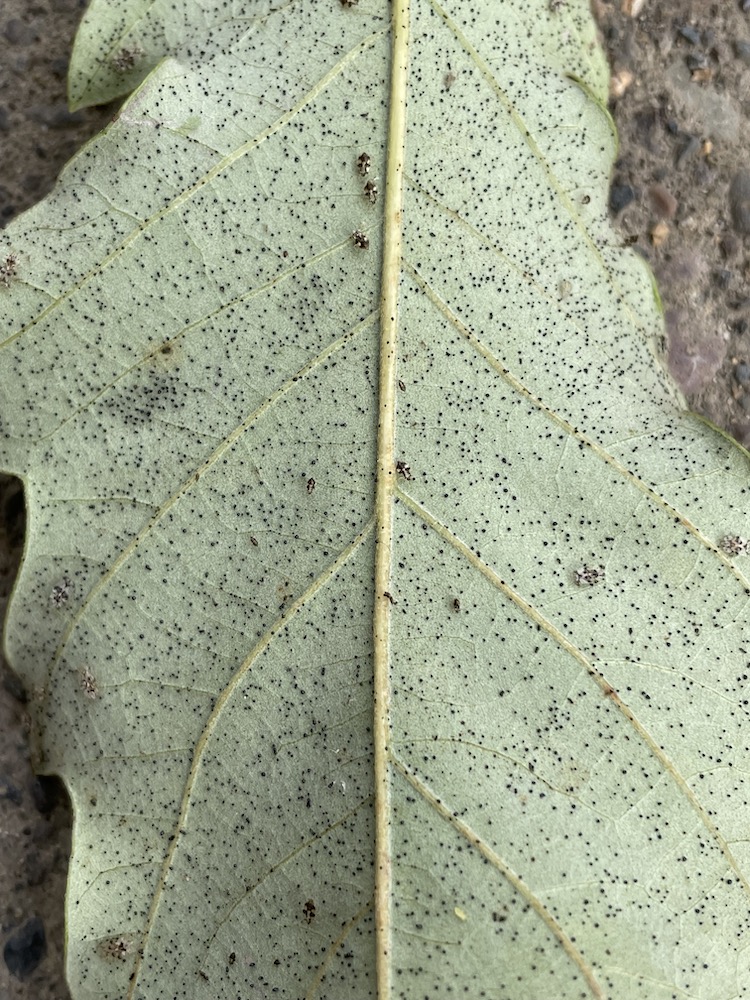
We are well into October already, and the skies have yet to open up with their life-giving rains. This year, summer began a month early, and it stubbornly refuses to concede to autumn with daytime temps, as of this date, still in the 70s and 80s. As a result of our multi-year long drought and overly hot summers temps, many of our native Douglas-firs, western red-cedars, black cottonwoods and alders are dying. Amazingly, I have even seen quite a few Oregon white oaks beginning to die. This is unprecedented! Many of these same oak trees, due to drought stress, are covered with a leaf blight known as anthracnose, and have also been attacked by zillions of chlorophyll sucking insect known as lace bugs. These pests literally suck the life out of the plants that they infest.  With regard to the stress I am seeing on many of our local trees, am I being an alarmist? Are we engaging in hyperbole? No! It’s fact. What can we do about it? Sadly, not much. Weather cycles have been occurring since the earth began, and trees have been marching north and south, east and west to adapt to climate change this whole time. This is evidenced by the fossil records, petrified wood, coal deposits and the skeletons of animals. The problem is that when the trees begin dying in your backyard and all around your neighborhood, this becomes an alarming and expensive situation, to say the least. So again what can you do? Water your trees and pray for rain. This is not good news, but what more can be said? 

We discuss these things and more on the Good News Tree Service, Inc. blog. Check out the archives for any tree and plant care articles that you may have missed. Also check out our YouTube channel at https://www.youtube.com/channel/UCvcu2lL9NpgoXQtUFYyQShw, our Facebook page at https://www.facebook.com/GoodNewsTreeService/ and our main website at https://goodnewstree.com. Please enjoy!

Readers’ suggestions on how to improve this list are gladly solicited. If you, the reader, have any suggestions for additions to this month’s list, please put them in the comments section of this article, and I will add them to the list. Thank you in advance! — Nathan Lawrence, the Treevangelist


Tree and Shrub Care

  • Fruit trees. This is an excellent time to prune trees that are done fruiting, since wounds will heal more quickly in warmer weather than occurs in winter. This is also a good time to reduce the height of overgrown fruit trees, since they are likely to produce fewer water sprouts now then when pruned in the spring. 
  • Large trees. After each major weather event, check your trees for damage such as broken or hanging limbs. If you have concerns or questions about your trees, have an ISA Certified Arborist with an ISA Tree Risk Assessment Qualification (like Good News Tree Service, Inc.) inspect your large trees for damage or the potential of failure due to weak root systems and defects in trunks and branches. 
  • Mulch. Wood chips from your local tree service is the best mulch bar none that you can put on your urban soil to beef up its fertility to improve your plants’ health. Tree service wood chips are a different look than your typical barkdust mulch, and it may some adaptation on your part, but the price of this mulch is right—usually it’s free. Barkdust doesn’t improve your soil quality and does little to improve plant health, wood chips do, however. Apply two to three inches of mulch (e.g., bark dust, garden compost or wood chips) on all of your shrub beds. Covering bare dirt areas in your yard with mulch helps to prevent soil compaction from rains, and weed growth, and helps to enrich our heavy clay soils. Also apply several inches of mulch over the tops of any perennials that may suffer damage from freezing temperatures to insure that they survive the winter.
  • Pines—pruning. During the cooler fall, winter and spring seasons is the best time to prune pine trees. For those into Japanese style pruning, this is the time to bud prune.

Our operation…

  • Pruning of trees and shrubs. You can do all aesthetic pruning of all ornamental shrubs and trees (except pines) at any time of the year in most cases. 
  • Pruning of large trees. Most trees in the temperate western valleys of Oregon and Washington can be pruned anytime of the year. If you’re not sure what to do, or how to do it, call Good News Tree Service, Inc. for a consultation, pruning lessons or to have us do the pruning for you. It is likely best to wait for cooler weather to prune stressed or sick looking trees or to do major pruning on trees. Call us if you have questions about this. Heavy pruning of some trees in the summer, especially conifers, can weaken or even kill them.
  • Tree and shrub removal and stump grinding can be done all year long. 
  • Trees—storm issues. With the advent of winter storms and the potential damage that they may inflict upon your trees, have an ISA Certified Arborist with an ISA Tree Risk Assessment Qualification (like Good News Tree Service, Inc.) inspect your large trees for the potential of failure due to weak root systems and defects in trunks and branches. This can be done anytime of the year, but now, before the winter storms hit, is an excellent time to proactive assess the condition of your trees for potential limb and trunk breakage.

Plant Health Care
Lace bugs on an oak leaf.
  • Arborvitae Berckmann’s blight (Platycladus orientalis). Spray with copper twice in the fall (late Sept. and early Oct., and again in early Nov. Spray again in early spring (Feb to Mar) if disease is severe. 
  • Deep root fertilization. Deep root fertilize your trees and shrubs to promote healthy root development in preparation for next springs growing cycle.
  • Magnolia bacterial blight. If your magnolia bush or tree has blighted leaves and flowers (dark, irregular spots) and the new shoots wilt and die in the spring, it may be magnolia bacteria blight. To treat, the magnolia needs to be sprayed once in the fall and twice in the spring near bud break.
  • Maples (including Japanese maples). Monitor the leaves of all maples and some other trees and shrubs for symptoms of the potentially lethal verticillium wilt fungal disease. If you see major branch dieback, call GNTS, Inc. for a free evaluation.
  • Verticillium wilt. The fall is the best time to treat your plants against this disease, and spring is the second  best time. Maples are especially plagued by this disease. During hot weather, symptoms include smaller than normal cupped leaves in the upper canopy, often with the death of the entire branch occurring. Maples are the hardest hit trees by this disease. Other trees susceptible to this persistent and potentially lethal fungal root disease include ash, box elder, golden rain tree, mountain ash, prunus spp. (cherry and plum), redbud, tree of heaven or silk tree, southern magnolia, tulip tree.

Elsewhere in the Garden

  • Birds. Dutifully maintain your bird feeders. As winter comes, birds have a harder time finding food.  This includes both seed and suet feeders. During dry spells, keep your bird bath watering hold full of fresh water. Caring for the local wild birds brings life and excitement to your backyard by turning it into a bird-friendly sanctuary. The birds will thank you for your generosity by providing you with hours of entertainment, and by eating insect pests that harm your ornamental trees and shrubs. Remember to feed your local humming birds that overwinter in our region. If possible, fill your humming bird feeders with a syrup that contains only 100 percent sugar (e.g. sucrose or dextrose) minus any artificial sweeteners, red dyes and other chemicals. Your birds will be healthier for it. You can find excellent bird care products and advice from knowledgeable and caring professionals at your local Backyard Bird Shop.
  • Ivy. Cut English ivy off of the base of trees. (This can be done any time of the year.)
  • Mulch. Mulch everything including all trees and shrubs. Apply a liberal dose of mulch over your perennial flowers, as well, to protect them from winter cold including frost, ice and snow. There is no reason to have any bare soil anywhere on your property, unless you like the look of unhealthy plants and pulling large quantities of weeds. Again, as noted above, your local tree service will happily provide you with as many wood chips as you need gratis. Just ask them. And don’t worry about the urban myth that unrotted wood chips rob nitrogen from your soil. I have been using green wood chips straight from my dump truck on my shrubs for 37 years without any negative consequences to the shrubs. If they look a little yellow, simply give them some nitrogen fertilizer.
  • Planting trees and shrubs. This is a good time of the year to plant trees and shrubs once the weather cools down and the rains start. Visit your local nursery and select your favorite ornamental shrubs and shade trees. After planting your new shrubs, just make sure that you water them well immediately and regularly subsequently for the first two or three summers until their roots get established. 
  • Slugs. Put slug bait around your flowers and tender perennials like hostas. 

Rose Care

  • Pruning. After the leaves fall off, prune your roses down by about one-third and remove any dead flowers and dead or diseased canes. 
  • Mulching. Heavily mulch your roses. Organic mulch (such as wood chips, rotted compost, rotted manure) is the best. While barkdust helps to hold moisture in the soil, it contains little or no nutrients, so it doesn’t feed the soil and thus won’t feed your roses.
  • For more information on the care of roses, go to the Portland Rose Society website at https://www.portlandrosesociety.org/all_about_roses.html.

Lawn Care

  • Weed control. Most perennial lawn weeds are more easily killed in the fall. Treat them with a broadleaf herbicide or pull them by hand.
  • Fertilization. If you only fertilize as part of your lawn maintenance once a year, fall is the best time to do it. In fact, your lawn will appreciate a light application of fertilizer in early autumn and again in late autumn.
  • Overseed bare spots. When the weather begins to cool down from the summer heat, yet while the grass is still growing, and the fall rains begin is an excellent time to overseed bare or thin spots in your yard. Fall is the best time of the year to reseed bare are of your lawn, while spring is the second best time.
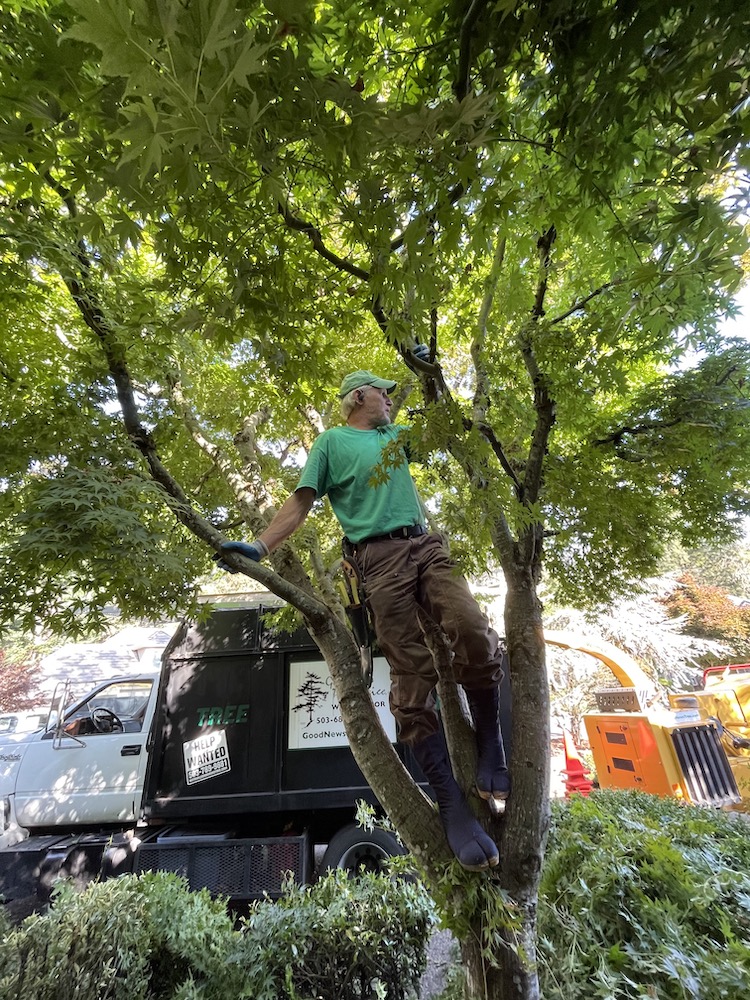
Nathan wearing his Japanese jika tabi boots so as not to damage the thin bark of this Japanese maple while he is pruning it.
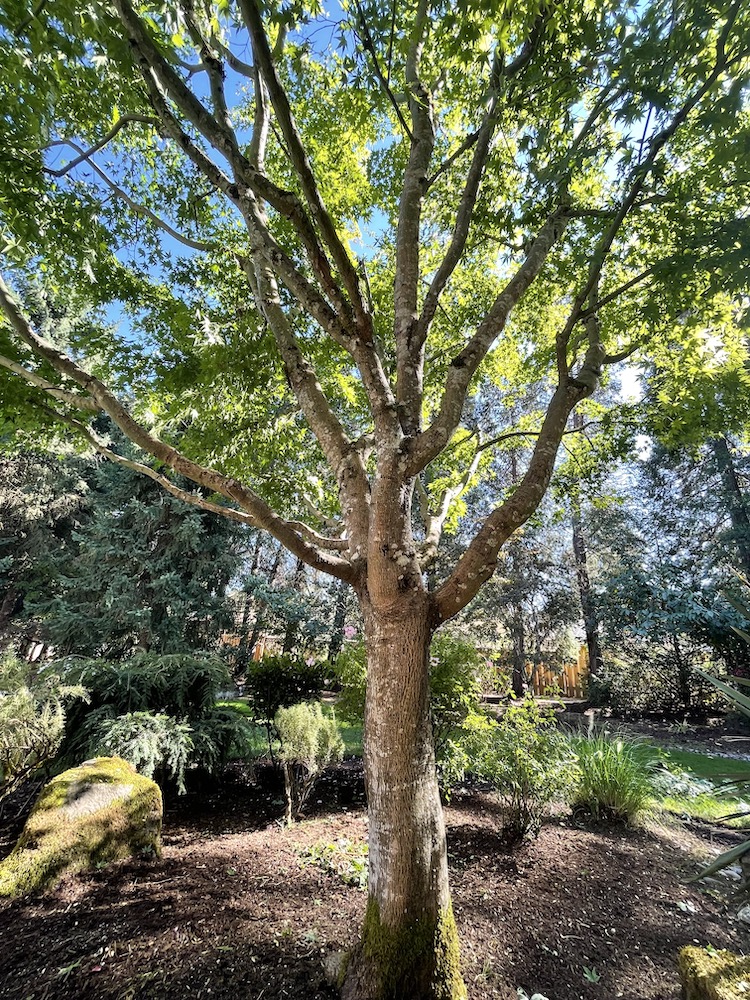
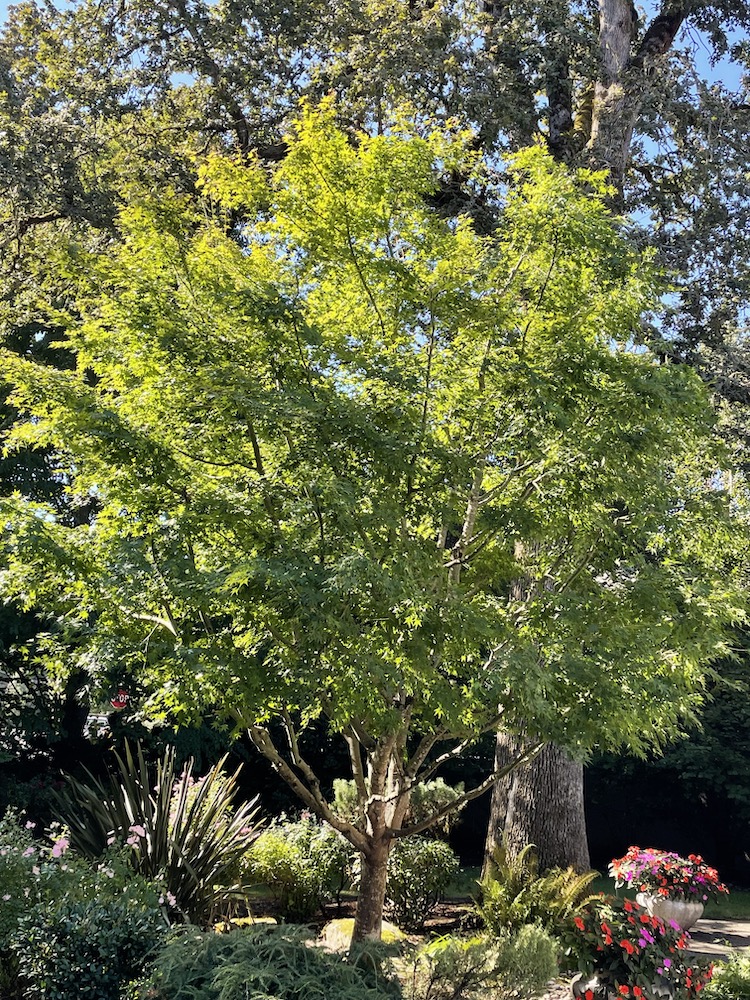
A Japanese maple tree the Nathan just aesthetically pruned.
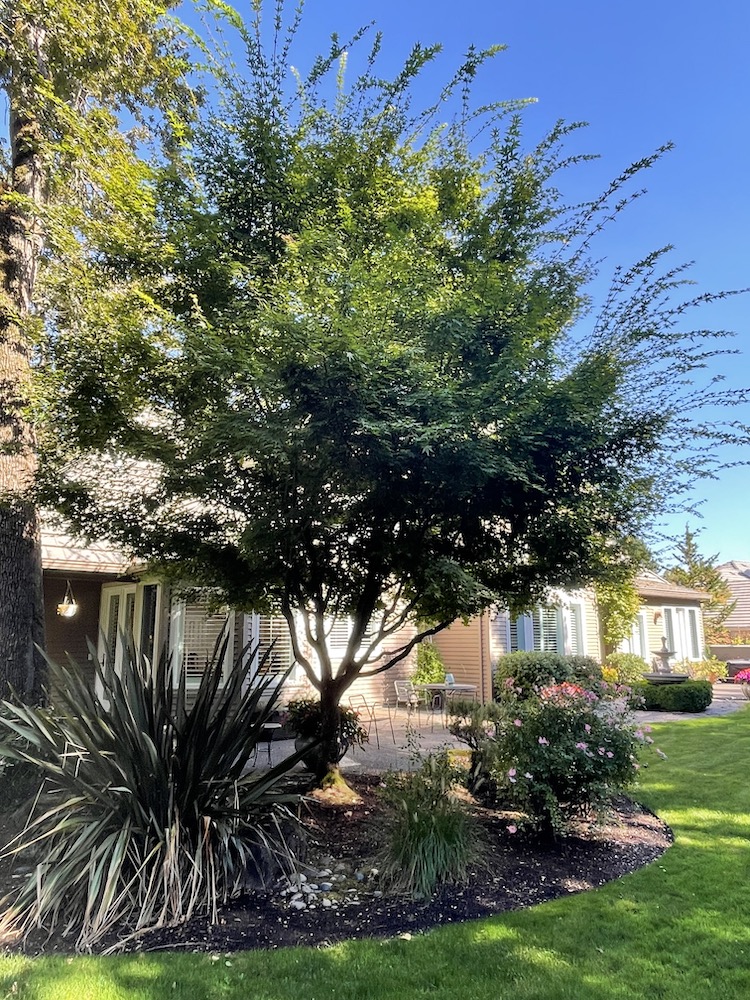
Here is the same tree from a distance.
Here is the same Japanese maple before Nathan started pruning it.
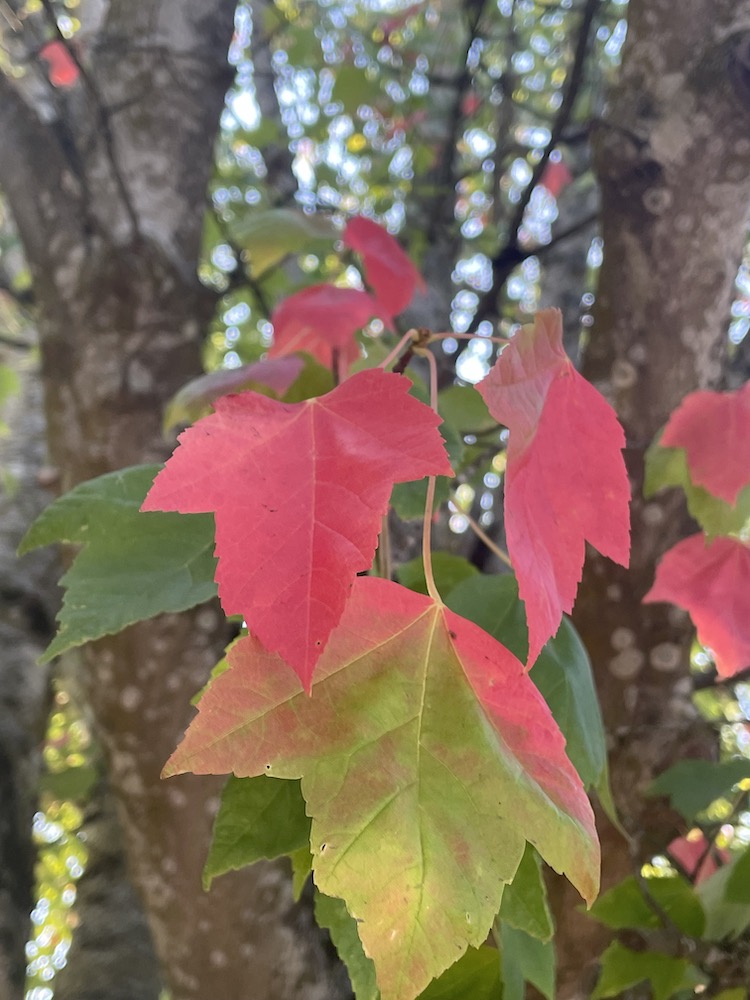
Hello fall!

Nathan’s Private Japanese Garden of Eden

There is a saying, “Practice what you preach”. Well, on this channel, we talk a lot about Japanese style tree and shrub pruning, but we live it also. This video is the first ever debut of and your personal invitation to tour Nathan’s own private Japanese garden, which he has created from nothing in his own, somewhat eclectic, Pacific Northwest style over the past 30 years. When he started, the yard was a blank palette…well, not exactly. It was actually a non-landscaped, weed-infested garbage dump. Nathan hauled out a 30-yard dumpster load of old motorcycle and car parts parts, broken furniture, pallets, dead animals, and a lot of other junk besides, and then he got to work transforming it into what it is today. Like all Japanese gardens, this one has been a work in progress, and there is still more to be done. In the mean time, please allow me to share it with you as it currently is. Enjoy.
September in the Garden—A To Do List

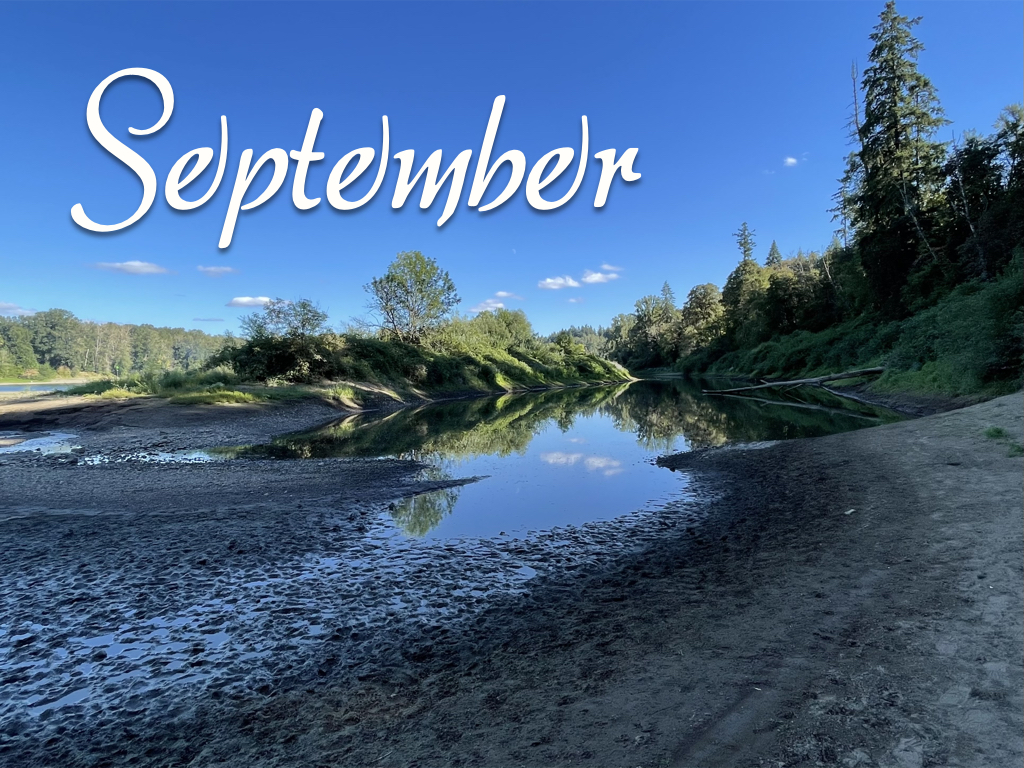
The Willamette River at Mary S. Young Park in West Linn

This guide is tailored for the western valleys of Oregon and Washington. 

YOU can help to make the world a better, a more friendly, loving and beautiful place by being a good steward of the spot on this earth that you are privileged to be borrowing for a time—your garden. Nathan, the Treevangelist, urges you to treat your spot on this planet like your own personal Garden of Eden paradise. Then notice the joy that it will bring to you! This is your Divinely mandated responsibility.  Your trees, shrubs, flowers and the wildlife in your yard will express their smiling appreciation back to you as they radiate love,  joy and beauty bursting forth with vibrant and verdant life. The following garden checklist will help you to do just that.

Even though fall is knocking on the door with cooler nights, the daytime temps, though a little cooler, are still way up there, and our drought continues with no rain in sight. Another heat record was broken with August being the hottest month in Portland’s history.  To wit, I am seeing more and more large forest trees suffering from heat stress with many  dying. It is bad enough when our yard shrubs stress due to drought, but to see our old, colossal and majestic native tree species dying is, to say the least, alarming. We have never seen this before. Obviously, this is the effects of climate change—a phenomenon that has been occurring since time began. Fossils, petrified wood and coal deposits prove that trees have been slowly marching north and south for eons of time in their effort to adapt to nature’s cycles. For example, you find tropical trees in arctic regions and vice versa as proof of this. The strong trees will survive while the weak ones will die off—the survival of the fittest. Drop man into the middle of this ongoing and relentless cycle, and it is disturbing to see a few of the trees in the forest behind your backyard dying, in our parks or in the state and national forests succumbing to these forces beyond man’s control. But that’s life, and like the trees, we too will adapt to nature’s endless circle of life and death.

But despite it all, there is still joy to found in the garden. The flowers are still smiling joyfully as the humming birds show off their aerial acrobatics in their dive bombing raids of flower’s sweet nectar. The trees are waving their leafy arms in the gentle breezes, the green grass is still growing, and yes the weeds are too. So extricate yourself from that black, depressing hole called watching or reading the news, take a break and get out in the garden!

While you’re at it, take a few moments and scroll back through this same Good News Tree Service, Inc. blog and check out the archives for any tree and plant care articles that you may have missed. Also check out our YouTube channel at https://www.youtube.com/channel/UCvcu2lL9NpgoXQtUFYyQShw, our Facebook page at https://www.facebook.com/GoodNewsTreeService/ and our main website at https://goodnewstree.com. Please enjoy!

Readers’ suggestions on how to improve this list are gladly solicited. If you, the reader, have any suggestions for additions to this month’s list, please put them in the comments section of this article, and I will add them to the list. Thank you in advance! — Nathan Lawrence, the Treevangelist


Tree and Shrub Care

  • Drought issues. The Willamette Valley remains in a serious drought (as well as the rest of this region). For a number of years, the fall, winter and spring rains have not been enough to sufficiently hydrate the soils to maintain the trees during the dry summer months. Each day, a tree sucks up vast quantities of water to keep it hydrated. If the soil moisture content is insufficient, then a tree will dry out, and begin to suffer by showing signs of stress. We are seeing more and more large native trees (e.g., Douglas-fir, western redcedar, spruce, native firs) getting stressed while some are even losing the battle to survive and are dying. If you have a tree that is showing signs of drought stress (e.g., pitch globules exuding from the bark, excess needle drop, yellowing of foliage), then you need to water your tree to save it, or pay the high price to have it removed after it has died. With a whirlybird, impulse or similar sprinkler or soaker hose, saturate the soil under the tree out to the tree’s drip zone (i.e., the outer tip of tree’s crown) for several hours once or twice a week to achieve deep root watering. Typical lawn irrigation systems don’t put out enough water to adequately irrigate the deeper roots of a tree, so don’t rely on your irrigation system to proved the water that large trees need to survive. 
  • Fruit trees. This is an optimal time to prune trees that are done fruiting, since wounds will heal more quickly in warm weather. This is a good time to reduce the height of overgrown fruit trees, since they are likely to produce fewer water sprouts now then when pruned in the spring. 
  • Maples (including Japanese maples). Monitor the leaves of all maples and other trees and shrubs for symptoms of the potentially lethal verticillium wilt fungal disease. If you see branch dieback, call GNTS, Inc. Other trees susceptible to this persistent and potentially lethal fungal root disease include ash, box elder, golden rain tree, mountain ash, prunus spp. (cherry and plum), redbud, tree of heaven or silk tree, southern magnolia, tulip tree.
  • Mulch. Apply two to three inches of mulch around all trees and ornamental shrubs. This helps to fertilize the plants and feed the soil, and also protects them against weed growth and loss of water when the warmer  weather returns.
  • Pines. Once the hot weather has passed, you can begin to prune your pines.
  • Prune fast growing ornamental shrubs (e.g., laurel, privet, photinia, laurustinus, barberry) that are beginning to look shabby. You may need to prune them again in the early summer for a more neat and manicured look.
  • Pruning of large trees. Most trees in the temperate western valleys of Oregon and Washington can be pruned anytime of the year. If you’re not sure what to do, or how to do it, call Good News Tree Service, Inc. for a consultation, pruning lessons or to have them do the pruning for you. It is likely best to wait for cooler weather to prune stressed or sick looking trees. Call us if you have questions about this.
  • Pruning of trees and shrubs. You can do all aesthetic pruning of all ornamental shrubs and trees (except pines) at any time of the year including summer. Don’t over-prune the top crowns of thin barked trees (e.g. Japanese maples, flowering cherries), since the sun’s UV rays can cause trunk and branch bark dessication resulting in cracking and dieback of sapwood and even heartwood resulting in entry points for diseases and potential structural failure of branches and trunks.

Be careful not to do major pruning during periods of hot weather, since doing so exposes tender leaves underneath that haven’t acclimated to the sun’s ultraviolet rays yet, since they have been shielded by the layer of leaves you’ve just removed by pruning. Sun scald of these tender leaves may occur, especially on southern and  southwestern sides of the plant. Sun scalded leaves won’t kill the plant, but it looks unsightly and diminishes the plant’s ability to photosynthate (produce food for itself). 

  • Tree and shrub removal and stump grinding can be done all year long. 
  • Trees. Have an ISA Certified Arborist with an ISA Tree Risk Assessment Qualification (like Good News Tree Service, Inc.) inspect your large trees for the potential of failure due to weak root systems and defects in trunks and branches. This can be done anytime of the year.

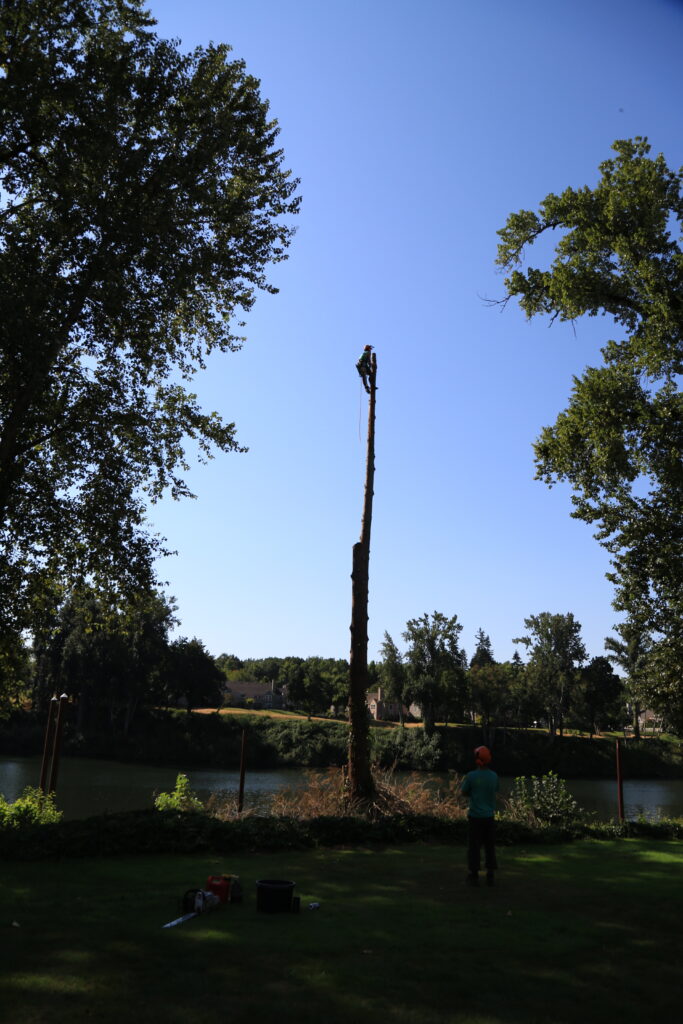
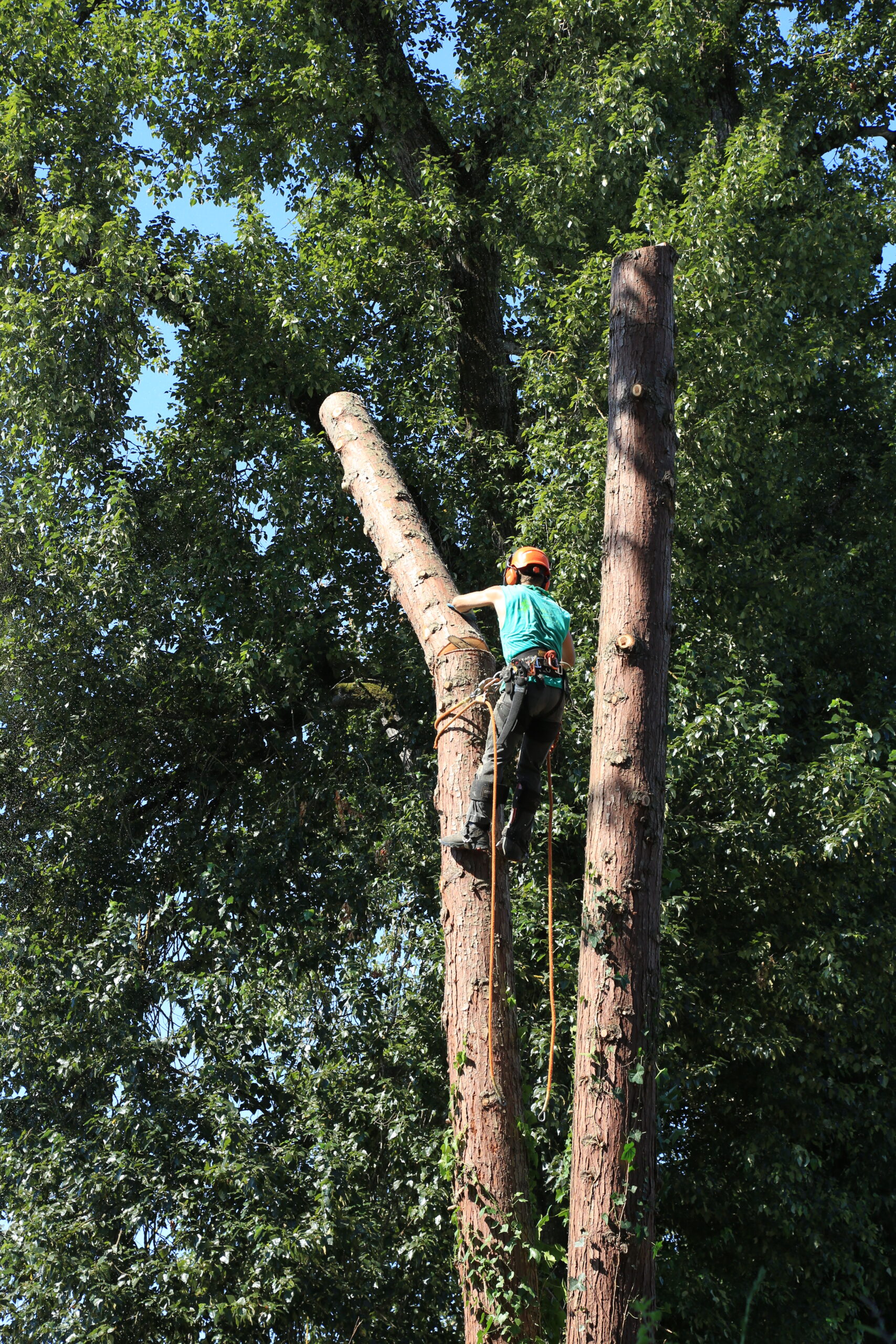
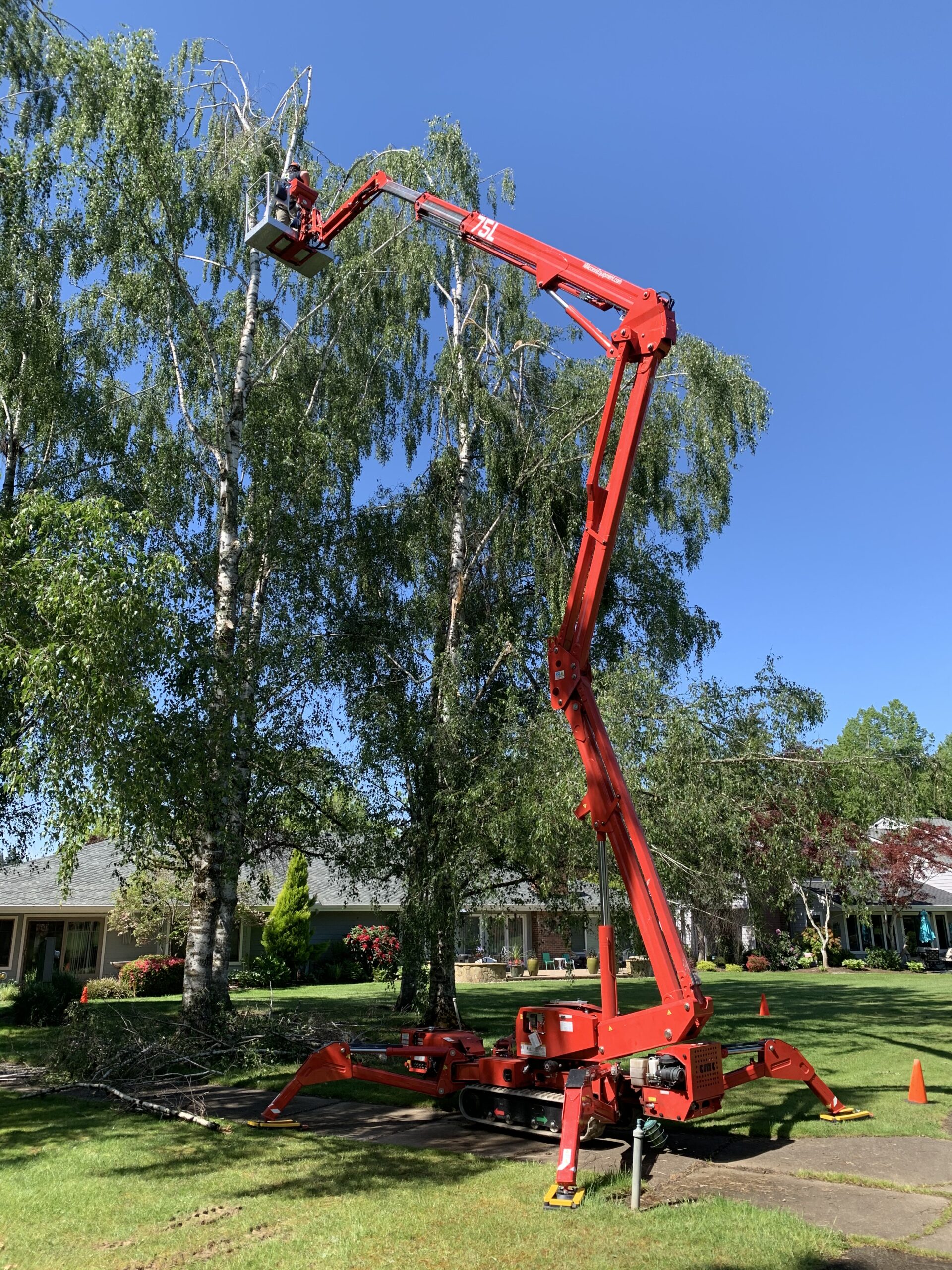
Jared and crew removing a dead tree along the Willamette River.

  • Watering. During the hot summer months, well established trees and larger ornamental shrubs need little or no watering under normal weather conditions. However, newly planted trees and shrubs will need watering for the first two to three summers until their roots get established. Regular lawn irrigation isn’t sufficient to give trees and shrubs the deep watering they need to survive the summer heat. During warm weather, deep water your new plants at least once per week. During hot weather, twice per week.

Plant Health Care

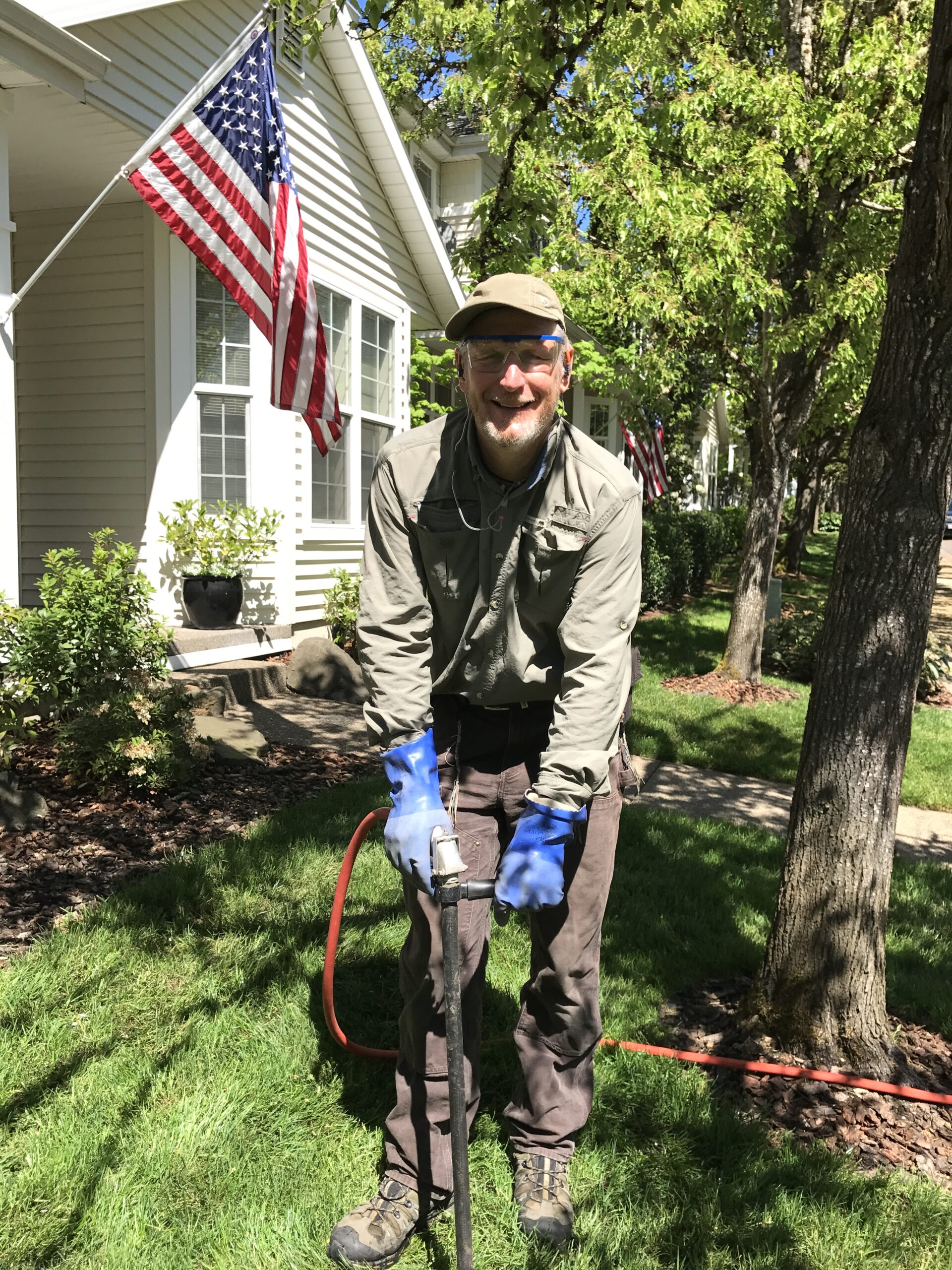
Nathan deep root fertilizing a tree.
  • Deep root fertilization. Deep root fertilize your trees and shrubs to promote healthy root development in preparation for next springs growing cycle. Fall and spring are the best times to give your plants a shot of liquid fertilizer into their roots zones via hydraulic injection Good News Tree Service, Inc. provides this service.
  • Dogwood anthracnose. If you missed the spring sprays topical fungal sprays,  and you see signs of anthracnose on your tree’s leaves (reddish, purplish, brownish splotches), you can spray your trees with a basal bark fungicide. Call GNTS, Inc. for information on this treatment.
  • Verticillium wilt. The fall is the best time to treat, and spring is the second  best time. Maples are especially plagued by this disease. During hot weather, symptoms include smaller than normal cupped leaves in the upper canopy, often with the death of the entire branch occurring.

Elsewhere in the Garden

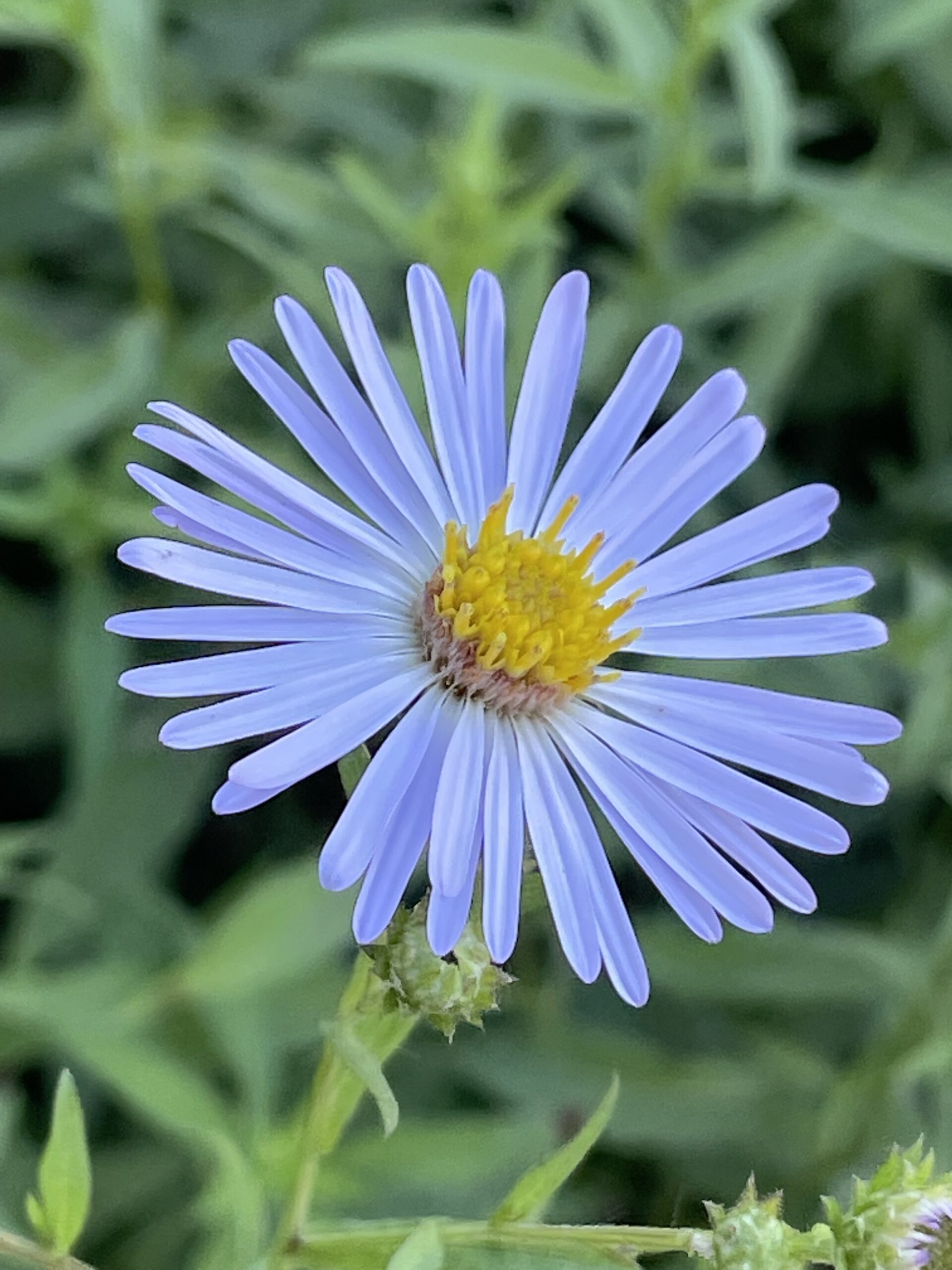
A wild aster along the Willamette River at Mary S. Young Park in West Linn.
  • Birds. Dutifully maintain your bird feeders. Bring life and excitement to your backyard by turning it into a bird sanctuary. The birds will thank you for your generosity by providing you with hours of entertainment, and by eating insect pests that harm your ornamental trees and shrubs. Birds in the yard are not only fun to watch, but they perform the vital task of eating harmful insects. Keep bird baths full. In hot and dry weather, birds need water to drink and to bathe in.  For more information on caring for the birds, check out https://backyardbirdshop.com.
  • Ivy (an invasive species). Cut English ivy off of the base of trees. (This can be done any time of the year.)
  • Mulching. Apply two to three inches of mulch (e.g., bark dust, garden compost or wood chips) on all of your shrub beds. Covering bare dirt areas in your yard with mulch helps to prevent soil compaction from rains, and weed growth, and helps to enrich our heavy clay soils.
  • Planting. This is a good time of the year to plant trees and shrubs. Visit your local nursery and select your favorite ornamental shrubs and shade trees. After planting your new shrubs, just make sure that you water them well immediately and regularly subsequently for the first two or three summers until their roots get established. During warm weather (in the 60s to low 80s), deep root water once per week. During hot weather (mid-80s and higher) deep root water at least twice per week.
  • Slugs. Put slug bait around your flowers and tender perennials like hostas.

Rose Care

  • Pruning. Prune your roses down by about one-third and remove any dead flowers and dead or diseased canes. 
  • Mulching. Heavily mulch your roses. Organic mulch (such as wood chips, rotted compost, rotted manure) is the best. While barkdust helps to hold moisture in the soil, it contains little or no nutrients, so it doesn’t feed the soil and thus won’t feed your roses.
  • For more information on the care of roses, go to the Portland Rose Society website at https://www.portlandrosesociety.org/all_about_roses.html.

Lawn Care

  • Irrigation. Water deeply, slowly and as infrequently as possible. Try to avoid watering established lawns more than two or three times per week if possible except during extremely in hot conditions. It is not a bad idea to let the soil under your grass to dry out for a short time in between watering as this forces the grass roots to grow deeper in search of water thus making for a more drought tolerant lawn. It is best not to rely on timers for irrigation as temperatures will dictate water needs in addition to lack of rainfall. However, timers are helpful if you have lawns areas that are to large to micromanage or you will be gone for a period of time. 
  • Mowing. Mow once a week or as needed, removing no more than one-third of the height of the grass to avoid stressing it. Mow regularly to prevent weed seed spread.
  • Letting your lawn go dormant. If you want to save on your water bill during the summer months, you can skip watering your lawn if you don’t mind it turning brown. It is not dead; it is merely sleeping or in a dormant state. When the rains start up again in the fall, your lawn will turn green and start growing again. 
Artistic beauty comes in many forms and is to be found everywhere in the forest. Take a walk and open your eyes and your heart do nature’s wonders.
September is wild blackberry season ripe for free picking and eating.
Even common weeds like fireweed adorn the garden of God’s earth. Stop and enjoy!
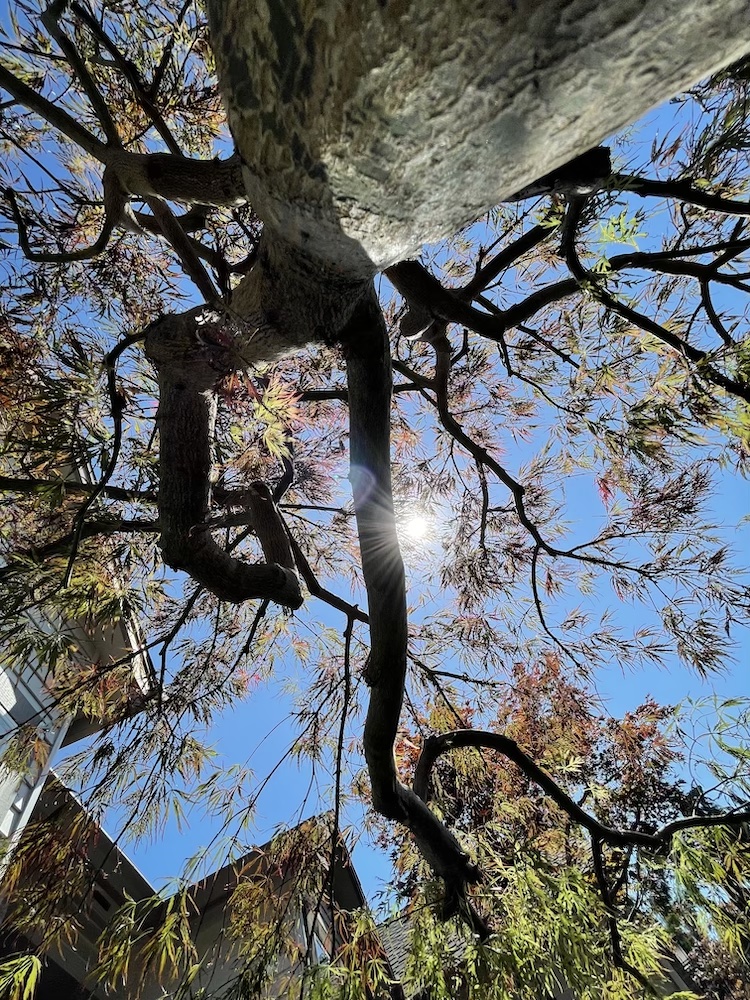
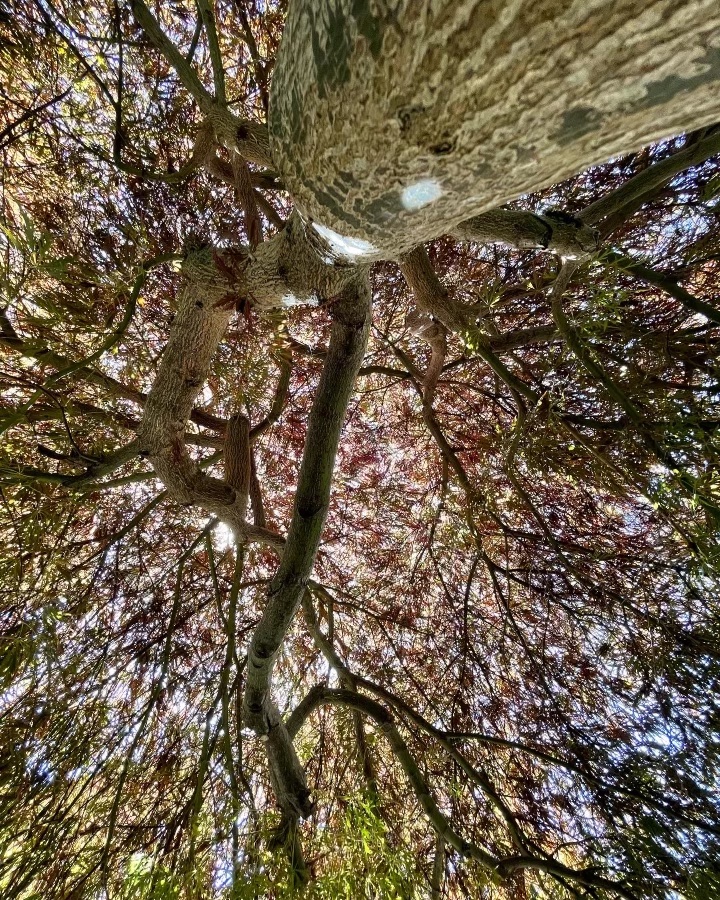
One of the hundreds of laceleaf Japanese maples we regularly prune. This time from another perspective.
At Good News Tree Service, Inc., we try to save as many trees as possible, but sometimes trees die. In this case, it was the drought that killed this cedar tree, sadly.

Portland Japanese Garden–Critical Review of Pruning Techniques

This video is a tour and critical review of the pruning techniques of the world famous (#1 in North America and one of the top in the world) Portland (Oregon) Japanese Garden by Nathan Lawrence, ISA Certified Arborist and master aesthetic pruner. If you are an avid gardener and plant lover, a pilgrimage to this iconic garden will challenge, inspire and enlighten you all at the same time. You will leave a changed person—for the better. Check this video out and then if you can, visit this amazing garden that is actually five gardens in one!

Help Wanted—Come Join Our Team!

Wilsonville Tree Service Employment Opportunities

Full or Part-time positions available at Good News Tree Service, Inc. of Wilsonville, Oregon. We are seeking associates who are passionate about a career in the tree care industry.

Qualifications

  • Some tree or shrub pruning experience is preferable, or you must have a quick ability to learn basic pruning skills through on-the-job training and self-directed learning through on-line videos and reading.
  • Valid drivers licence and proof of insurance required.
  • Willing to work hard in all types of weather conditions.
  • Must be able to follow instructions and eager to learn.
  • Must be clean and neat in appearance, polite, well-mannered, possess good morals and ethics and have clean speech.

Pay

  • Starting at $18 to 25 per hour (depending on experience and qualification) for ground workers. After a two month probation period followed by favorable evaluation, pay increase are possible.

Advantages of Working for Good News Tree Service, Inc. of Wilsonville

  • Get to work for a small, family owned business where you’re treated with care and dignity.
  • Learn a variety of arboricultural skills.
  • Work in many varied situations—a different job site every day.
  • Nearly all of our jobs are within 5 to 15 minutes of Wilsonville.
  • We work mostly on high-end (beautiful) properties.

Job Description

  • Brush dragging and clean up.
  • Become a ground-worker under a high climbing arborist.
  • Basic tree and shrub pruning.
  • Operating and maintaining a brush chipper, chainsaw, stump grinder and other small equipment.

Opportunities and Advancement

  • After learning the basics of being a ground worker, one can advance to basic pruning of trees and shrubs, then onto climbing of small trees, then onto larger trees including pruning and removals, aerial lift operator, crew leader or project supervisor, or a plant health care specialist.
  • We will work with you personally to develop your skills in the tree care industry and help you advance in your career path including becoming an ISA Certified Arborist and beyond.

Check us out at www.goodnewstree.com, Facebook or on YouTube.

Call Nathan at (503) 789-9881 for more information

August in the Garden—A To Do List

The Nenana River along the Denali Highway in Alaska

This guide is tailored for the western valleys of Oregon and Washington. 

YOU can help to make the world a better, a more friendly, loving and beautiful place by being a good steward of the spot on this earth that you are privileged to be borrowing for a time—your garden. Nathan, the Treevangelist, urges you to treat your spot on this planet like your own personal Garden of Eden paradise. Then notice the joy that it will bring to you! This is your Divinely mandated responsibility.  Your trees, shrubs, flowers and the wildlife in your yard will express their smiling appreciation back to you as they radiate love , joy and beauty bursting forth with vibrant and verdant life. The following garden checklist will help you to do just that.

Spring 2022 was a little wetter than usual—a good thing. But summer’s blast furnace started early again this year, and the heat wave still hasn’t abated—not such a good thing for the plants. Due to the erratic weather patterns of the past few years, the some plants are exhibiting signs of stress. Generally, plants prefer gradual changes weathewise, and struggle when weather  patterns change too abruptly. Since the life forces in a tree move in the slow lane, trees are unable to acclimate to sudden changes, thus making them more susceptible to stressors like drought and pests. I’ve even noticed a few local otherwise hardy native oak trees turning brown and dying. Even though we had a wet winter and spring, this wasn’t enough to abate our prolonged drought that is still killing some native trees like Western red-cedars and Douglas-firs. Below, I tell you how to give your stressed trees a little extra TLC to help them get through this tough time in their long lives.

While you’re at it, take a few moments and scroll back through this same Good News Tree Service, Inc. blog and check out the archives for any tree and plant care articles that you may have missed. Also check out our YouTube channel at https://www.youtube.com/channel/UCvcu2lL9NpgoXQtUFYyQShw, our Facebook page at https://www.facebook.com/GoodNewsTreeService/ and our main website at https://goodnewstree.com. Please enjoy!

Readers’ suggestions on how to improve this list are gladly solicited. If you, the reader, have any suggestions for additions to this month’s list, please put them in the comments section of this article, and I will add them to the list. Thank you in advance! — Nathan Lawrence, the Treevangelist


The following photos will still be from the Pacific Northwest, but just a little further north up the coast all the way to Alaska including the Arctic Circle. My wife and I recently returned from Fairbanks and north, then worked our way south through the Denali area and ended up in Sitka, which is in the extreme SE panhandle area of that vast state. Please enjoy!

Tree and Shrub Care

What comes to mind you think of the Arctic Circle? Igloos, eskimos, sled dogs, polar bears and icebergs? Well, I took this photo some 20 miles inside the Arctic Circle about 200 miles north of Fairbanks. The only trees that grow here are black spruce, willow, aspen, birch and cottonwoods. They are small and short, since the permafrost is very shallow.
  • Birch trees. Thanks to the bronze birch borer beetle, a large number of the Pacific Northwest birch trees are dying. To make your tree less hospitable to this nasty and lethal pest, there are two inexpensive things you can do. First, apply several inches of mulch to the ground under the canopy of your birch tree. Second, with a whirly bird sprinkler, irrigate the area under the birch’s canopy. The more water the better, since birches are water-loving trees. Irrigate once a week for several hours during warm weather and twice during hot weather. These two actions will lessen the chances that the beetle will attack and kill your birches. The bronze birch borer beetle can be treated in the late spring, but treatments are expensive. Call Good News Tree Service, Inc. for more info.
  • Dogwood trees. Monitor leaves for signs of anthracnose. As the summer draws on, the symptoms on the leaves get worse. (See more info below.)
  • Maples (including Japanese maples). Monitor the leaves of all maples and other trees and shrubs for symptoms of the potentially lethal verticillium wilt fungal disease. If you see branch dieback, call Good News Tree Service, Inc.
  • Mulch. Apply two to three inches of mulch around all trees and ornamental shrubs. This helps to fertilize the plants and feed the soil, and also protects them against weed growth and loss of water when the warmer  weather returns.
  • Pruning of trees and shrubs. You can do all aesthetic pruning of all ornamental shrubs and trees (except pines) at any time of the year including summer. Don’t over-prune the top crowns of thin barked trees (e.g. Japanese maples, flowering cherries), since the sun’s UV rays can cause trunk and branch bark dessication resulting in cracking and dieback of sapwood and even heartwood resulting in entry points for diseases and potential structural failure of branches and trunks.

Also be careful not to do major pruning during periods of hot weather, since doing so exposes tender leaves underneath that haven’t acclimated to the sun’s ultraviolet rays yet, since they have been shielded by the layer of leaves you’ve just removed by pruning. Sun scald of these tender leaves may occur, especially on southern and  southwestern sides of the plant. Sun scalded leaves won’t kill the plant, but it looks unsightly and diminishes the plant’s ability to photosynthate (produce food for itself).

  • Pruning of large trees. Most trees in the temperate western valleys of Oregon and Washington can be pruned anytime of the year. If you’re not sure what to do, or how to do it, call Good News Tree Service, Inc. for a consultation, pruning lessons or to have them do the pruning for you. It is likely best to wait for cooler weather to prune stressed or sick looking trees. Call us if you have questions about this.
In the tundra of the Arctic Circle, the trees are small, so not much pruning is necessary. Due to the harsh growing conditions and short growing season, they are natural bonsais.
  • Prune fast growing ornamental shrubs (e.g., laurel, privet, photinia, laurustinus, barberry) that are beginning to look shabby. You may need to prune them again in the early summer for a more neat and manicured look. 
  • Tree and shrub removal and stump grinding can be done all year long. 
  • Trees. Have an ISA Certified Arborist with an ISA Tree Risk Assessment Qualification (like Good News Tree Service, Inc.) inspect your large trees for the potential of failure due to weak root systems and defects in trunks and branches. This can be done anytime of the year.
  • Conifer trees that are drought stressed. The Willamette Valley remains in a prolonged drought. Large native trees (e.g., Douglas-fir, western redcedar, spruce, native firs) are getting stressed and some are dying. If you have a tree that is showing signs of drought stress (e.g. pitch globules exuding from the bark, excess needle drop, yellowing of foliage), then you need to water your tree to save it, or pay the high price to have it removed after it has died. With a whirlybird, impulse or similar sprinkler or soaker hose, saturate the soil under the tree out to the tree’s drip zone (i.e., the outer tip of tree’s crown) for several hours once or twice a week to achieve deep root watering. Typical lawn irrigation systems don’t put out enough water to adequately irrigate the deeper roots of a tree, so don’t rely on your irrigation system to proved the water that large trees need to survive.
  • Watering. During the hot summer months, well established trees and larger ornamental shrubs need little or no watering. However, newly planted trees and shrubs will need watering for the first two to three summers until their roots get established. Regular lawn irrigation isn’t sufficient to give trees and shrubs the deep watering they need to survive the summer heat. During warm weather, deep water your new plants at least once per week. During hot weather, twice per week.

Plant Health Care

Birch trees south of the Arctic Circle on the Dalton Highway.
  • Birch trees. At this time of the year, many birch trees are dying. This due to a birch killing beetle called the bronze birch borer. This pest has no natural predatory enemies and no inexpensive cure is in sight for this pest. The beetle is killing at least 60 percent of the birch trees in this region and yours may be next. In the previous section of this article, we discuss this issue in more detail.
  • Deep root fertilization. Be careful about fertilizing shrubs (especially with quick release fertilizers) after the weather becomes too hot. Fertilizer will push out new growth, which will likely scorch in sun. This is a waste of fertilizer and plant resources.
  • Dogwood trees. This popular garden tree is very hardy and has very few pests except for the dogwood anthracnose leaf blight (discussed below) and occasionally the summertime non-lethal powdery mildew that appears on the leaves. Two things can occur on the leaves of the dogwood tree that often alarm homeowners. First, sometimes the ends of the leaves may turn brown and die. This can be due to anthracnose (discussed below) or due to sunburn or leaf scorch. The latter condition occurs because the dogwood is a shade preferring tree, and when we plant them in the full sun, the leaves that are on the sunny side of the tree often get sunburned. Though unsightly, this will not kill the tree. Another symptom of the tree’s dislike for hot sun is that the leaves will fold in on themselves at the mid-rid of the leaf blade. This is the dogwood’s unique defense mechanism to combat water loss due to evaporation or transpiration. It appears as if the leaves are wilting due to lack of water. This may not be the case, since even trees that are irrigated regularly will take on this cup shape—especially leaves that are exposed to full sunlight. Leaves that are not in the sun’s light will usually stay flat and unfolded. 
Dogwood flower in the University of Alaska Fairbanks botanical garden.
  • Dogwood anthracnose. If you missed the spring sprays topical fungal sprays,  and you see signs of anthracnose on your tree’s leaves (reddish, purplish, brownish splotches), you can spray your trees with a basal bark fungicide. Call Good News Tree Service, Inc. for information on this treatment.
  • Monitor trees and shrubs for insect pests. Piercing and sucking plant pests (e.g., aphids, lacebugs, scales, weevils, mites, etc.) are now out and active. If major infestation occurs, plan a course of action to treat your trees and shrubs against these pests. Small numbers of piercing and sucking insects are not harmful to plants. In fact, they provide food for the beneficial, predatory insects that feed on them. To control harmful insects, one can apply systemic insecticides against piercing sucking insects (aphids, lacebugs, scales, weevils, etc.) via soil injections (one treatment gives season-long control). If applied according to label directions, this will kill only the harmful and not beneficial insects.
  • Spider mites will start to become active as the weather warms. Systemic insecticides are available against this pest.
  • Verticillium wilt. The fall is the best time to treat, and spring is the second  best time. Maples are especially plagued by this disease. During hot weather, symptoms include smaller than normal cupped leaves in the upper canopy, often with the death of the entire branch occurring.

Elsewhere in the Garden 

Fireweed (along with yarrow) grows from the Arctic Circle all the way into the SE panhandle area of Alaska. Even though it’s not the official flower of that state, it maybe should be.
  • Birds. Feed the birds. Dutifully maintain your bird feeders. Bring life and excitement to your backyard by turning it into a bird sanctuary. The birds will thank you for your generosity by providing you with hours of entertainment, and by eating insect pests that harm your ornamental trees and shrubs. Birds in the yard are not only fun to watch, but they perform the vital task of eating harmful insects. Keep bird baths full. In hot and dry weather, birds need water to drink and to bathe in.
  • Flowers. Water and fertilize annuals and perennial flowers. The hotter the weather, the more water they will need. Flowers in pots and hanging baskets dry out especially quickly, and so need watering every day or two.
  • Ivy. Cut English ivy off of the base of trees. (This can be done any time of the year.)
  • Mulch. Apply two to three inches of mulch (e.g. bark dust, garden compost or wood chips) on all of your shrub beds. Covering bare dirt areas in your yard with mulch helps to prevent soil compaction from rains, and weed growth, and helps to enrich our heavy clay soils.
  • Planting. This is a good time of the year to plant trees and shrubs as long as you keep them well-watered. Visit your local nursery and select your favorite ornamental shrubs and shade trees. After planting your new shrubs, just make sure that you water them well immediately and regularly subsequently for the first two or three summers until their roots get established. During warm weather (in the 60s to low 80s), deep root water once per week. During hot weather (mid-80s and higher) deep root water at least twice per week.
A giant slug in the Tongass rainforest near Sitka, Alaska.
  • Slugs. Put slug bait around your flowers and tender perennials like hostas.

Rose Care

One doesn’t see too many wild roses in Alaska, but berries grow everywhere and are a main source of food for bears. These are lingonberries growing in the tundra of the Arctic Circle.
  • Pests. Spray or treat roses with a fungicide as needed preventively to insure protection against fungal pathogens such as black spot, powdery and cottony mildew, rust and spot anthracnose. Apply a fungicide only after the rose has put out several inches of new growth. Excellent choices of both organic and inorganic fungicides are available at your local garden center or nursery. Some fungicides require spraying in the early spring as the new growth is emerging. Major plant pests include mites, aphids, thrips, rose slugs, leaf rollers, rose midge, spittle bug and sawfly. Determine what pest or disease your rose has, do some research online if necessary to ascertain this, and then visit your local garden center or nursery to find the right product for the job. Always read and follow all label directions. It’s the law! 
  • Dead heading. As needed, remove spent flowers after they are done blooming.
  • Fertilize. In late August, fertilize roses again.
A splendid peony from the University of Alaska Fairbanks botanical garden.
  • Irrigation and pest control. During prolonged warm, dry weather, deep root water your roses at least once a week. A rose needs five gallons of water per plant per week. During hot summer weather. Spray roses with water (not in the morning, though) to cool them down, and spray top and undersides of leaves to wash off pests such as spider mites and aphids.

Lawn Care

  • Maintenance. Summer is about mowing, watering, and pest control. Stay on top of mowing for a healthy lawn. Mow once a week or as needed. Remove no more than one-third of the height of the grass to avoid stressing it. Mow regularly to prevent weed seed spread.
  • Irrigation. Water deeply, slowly and as infrequently as possible. Try to avoid watering established lawns more than two or three times per week if possible except during extremely in hot conditions. It is not a bad idea to let the soil under your grass to dry out for a short time in between watering as this forces the grass roots to grow deeper in search of water thus making for a more drought tolerant lawn. It is best not to rely on timers for irrigation as temperatures will dictate water needs in addition to lack of rainfall. However, timers are helpful if you have lawns areas that are to large to micromanage or you will be gone for a period of time. If you want to save on your water bill during the summer months, you can skip watering your lawn if you don’t mind it turning brown. It is not dead; it is merely sleeping or in a dormant state. When the rains start up again in the fall, your lawn will turn green and start growing again. 
Spruce against a birch back drop in the Denali National Park.
A view of the boreal forest on the Denali Highway east of the Denali National Park.
The Tongass National (rain) Forest near Sitka.
A wild (weed) flower growing next to a city sidewalk in Anchorage.
Devils club growing in the Tongass National (rain) Forest near Sitka.
The University of Alaska Fairbanks botanical garden.
Vegetables growing in the University of Alaska Fairbanks botanical garden. In July, there were also plenty of ripe tomatoes, peppers and summer squash!

July in the Garden—A To Do List

This guide is tailored for the western valleys of Oregon and Washington. 

YOU can help to make the world a better, a more friendly, loving and beautiful place by being a good steward of the spot on this earth that you are privileged to be borrowing for a time—your garden. Nathan, the Treevangelist, urges you to treat your spot on this planet like your own personal Garden of Eden paradise. Then notice the joy that it will bring to you! This is your Divinely mandated responsibility.  Your trees, shrubs, flowers and the wildlife in your yard will express their smiling appreciation back to you as they radiate love , joy and beauty bursting forth with vibrant and verdant life. Here is a to do list to help you to do just that…

In July as Americans, we celebrate our independence from extreme and overreaching  governmental tyranny as well as our liberty and freedom to pursue our happiness, to speak freely and practice our beliefs and religions according to the dictates of our own individual conscience without fear of others fascistically imposing their beliefs upon us.  To be sure, our freedom and liberty from oppression is a God-given blessing that most other countries don’t have!

In a similar though slightly oblique vein, in the garden, our plants have a celebration of their own going on as they declare their freedom to express their full potential as they burst forth with a panoply of starburst blooms of all shades of red, white and blue. The photo above is a montage of flowers from my own garden.

Let’s all rejoice along with our flowers and be thankful for the blessings that we have of living in the greatest nation on God’s green earth! As one person recently said in light of current negative events rocking the U.S. and the world, it is all too easy to focus on the weeds in the garden instead of on the beautiful flowers, vegetables along with the trees and shrubs. Let’s all work together at pulling the weeds out of our own personal garden without destroying other people’s gardens along with all the other good plants that are out there! Those who are  wise among us will ponder these words and will work to be part of the solution rather than part of the problem, that is, without destroying the whole garden of our society in the process. 

While you’re at it, take a few moments and scroll back through this same Good News Tree Service, Inc. blog and check out the archives for any tree and plant care articles that you may have missed. Also check out our YouTube channel at https://www.youtube.com/channel/UCvcu2lL9NpgoXQtUFYyQShw, our Facebook page at https://www.facebook.com/GoodNewsTreeService/ and our main website at https://goodnewstree.com. Please enjoy!

Readers’ suggestions on how to improve this list are gladly solicited. If you, the reader, have any suggestions for additions to this month’s list, please put them in the comments section of this article, and I will add them to the list. Thank you in advance!

This information is courtesy of Nathan Lawrence, the Treevangelist
(Preaching the good news of tree care and preservation and the good news or gospel of Jesus Christ—Yeshua the Messiah, who lovingly delivers those who trust in him from the wages of their sin which is death. HalleluYah! Now that is great news!!!)


Tree and Shrub Care

  • Birch trees. Thanks to the bronze birch borer beetle, a large number of the Pacific Northwest birch trees are dying. To make your tree less hospitable to this nasty and lethal pest, there are two inexpensive things you can do. First, apply several inches of mulch to the ground under the canopy of your birch tree. Second, with a whirly bird sprinkler, irrigate the area under the birch’s canopy. The more water the better, since birches are water-loving trees. Irrigate once a week for several hours during warm weather and twice during hot weather. These two actions will lessen the chances that the beetle will attack and kill your birches. The bronze birch borer beetle can be treated in the late spring, but treatments are expensive. Call GNTS. Inc. for more info.
  • Dogwood trees. Monitor leaves for signs of anthracnose. (See more info below.)
  • Hedge. Shear after spring growth and before hot weather. Shearing during hot weather may result in sun scald of newly exposed under-foliage.
  • Maples (including Japanese maples). Monitor the leaves of all maples and other trees and shrubs for symptoms of the potentially lethal verticillium wilt fungal disease. If you see branch dieback, call GNTS, inc.
  • Mulch. Apply two to three inches of mulch around all trees and ornamental shrubs. This helps to fertilize the plants and feed the soil, and also protects them against weed growth and loss of water when the warmer  weather returns.
  • Pine tree pruning. Don’t do major pruning of pine trees during the growing season, since this attracts sequoia pitch moth infestation.
  • Pruning of trees and shrubs. You can do all aesthetic pruning of all ornamental shrubs and trees (except pines) at any time of the year including summer. Don’t over-prune the top crowns of thin barked trees (e.g. Japanese maples, flowering cherries), since the sun’s UV rays can cause trunk and branch bark dessication resulting in cracking and dieback of sapwood and even heartwood resulting in entry points for diseases and potential structural failure of branches and trunks.
  • Be careful not to do major pruning during periods of hot weather, since doing so exposes tender leaves underneath that haven’t acclimated to the sun’s ultraviolet rays yet, since they have been shielded by the layer of leaves you’ve just removed by pruning. Sun scald of these tender leaves may occur, especially on southern and  southwestern sides of the plant. Sun scalded leaves won’t kill the plant, but it looks unsightly and diminishes the plant’s ability to photosynthate (produce food for itself).
  • Pruning of large trees. Most trees in the temperate western valleys of Oregon and Washington can be pruned anytime of the year. If you’re not sure what to do, or how to do it, call Good News Tree Service, Inc. for a consultation, pruning lessons or to have them do the pruning for you. It is likely best to wait for cooler weather to prune stressed or sick looking trees. Call us if you have questions about this.
  • Prune fast growing ornamental shrubs (e.g. laurel, privet, photinia, laurustinus, barberry) that are beginning to look shabby. You may need to prune them again in the early summer for a more neat and manicured look. 
  • Tree and shrub removal and stump grinding can be done all year long. 
  • Trees: Have an ISA Certified Arborist with an ISA Tree Risk Assessment Qualification (like Good News Tree Service, Inc.) inspect your large trees for the potential of failure due to weak root systems and defects in trunks and branches. This can be done anytime of the year.
  • Conifer trees that are drought stressed. The Willamette Valley remains in a severe drought. Large native trees (e.g. Douglas-fir, western red-cedar, spruce, native firs) are getting stressed and some are dying. If you have a tree that is showing signs of drought stress (e.g. pitch globules exuding from the bark, excess needle drop, yellowing of foliage), then you need to water your tree to save it, or pay the high price to have it removed after it has died. With a whirlybird, impulse or similar sprinkler or soaker hose, saturate the soil under the tree out to the tree’s drip zone (i.e. the outer tip of tree’s crown) for several hours once or twice a week to achieve deep root watering. Typical lawn irrigation systems don’t put out enough water to adequately irrigate the deeper roots of a tree, so don’t rely on your irrigation system to proved the water that large trees need to survive.
  • Watering trees and shrubs. During the hot summer months, well established trees and larger ornamental shrubs need little or no watering. However, newly planted trees and shrubs will need watering for the first two to three summers until their roots get established. Regular lawn irrigation isn’t sufficient to give trees and shrubs the deep watering they need to survive the summer heat. During warm weather, deep water your new plants at least once per week. During hot weather, twice per week.

Plant Health Care

  • Deep root fertilization. Don’t do so after the weather becomes too hot. Fertilizer will push out new growth, which will likely scorch in sun. This is a waste of fertilizer and plant resources.
  • Dogwood anthracnose. If you missed the spring sprays topical fungal sprays,  and you see signs of anthracnose on your tree’s leaves (reddish, purplish, brownish splotches), you can spray your trees with a basal bark fungicide. Call GNTS, Inc. for information on this treatment.
  • Monitor trees and shrubs for insect pests. Piercing and sucking plant pests (e.g. aphids, lacebugs, scales, weevils, mites, etc.) are now out and active. If major infestation occurs, plan a course of action to treat your trees and shrubs against these pests. Small numbers of piercing and sucking insects are not harmful to plants. In fact, they provide food for the beneficial, predatory insects that feed on them. To control harmful insects, one can apply systemic insecticides against piercing sucking insects (aphids, lacebugs, scales, weevils, etc.) via soil injections (one treatment gives season-long control). If applied according to label directions, this will kill only the harmful and not beneficial insects.
  • Spider mites will start to become active as the weather warms. Systemic insecticides are available against this pest.
  • Tent caterpillar. Apply systemic pesticide for season-long control.
  • Verticillium wilt. You can still treat trees for this soil born fungal pathogen during the summer, but fall is the best time to treat, and spring is the second  best time. Maples are especially plagued by this disease. During hot weather, symptoms include smaller than normal cupped leaves in the upper canopy, often with the death of the entire branch occurring.

Elsewhere in the Garden

  • Birds feeding. Don’t stop feeding the birds even during the spring and summer seasons. Dutifully maintain your bird feeders. Why? Even though we’re now past the winter season and there is more food available for the birds, having these feathery friends frequent your garden serves several purposes. First, they bring life and excitement to your backyard by turning it into a bird sanctuary. Second, your singing friends will thank you for your generosity by providing you with hours of entertainment, and by eating insect pests that harm your ornamental trees and shrubs. So bring life and excitement to your backyard by turning it into a bird sanctuary. Don’t forget to keep bird baths full. In hot and dry weather, birds need water to drink and to bathe in. Fertilizing shrubs. Fertilize your ornamental shrubs with a slow release fertilizer. If the shrubs have a layer of barkdust or other mulch around them, rake the mulch away and apply the fertilize to the bare dirt, so that it actually reaches the plant’s root zone. 
  • Flowers. Continue planting annual and perennial flowers. Water and fertilize annuals and perennial flowers. The hotter the weather, the more water they will need. Flowers in pots and hanging baskets dry out especially quickly, and so need watering every day or two.
  • Ivy. Cut English ivy off of the base of trees. (This can be done any time of the year.)
  • Mulch. Apply two to three inches of mulch (e.g. bark dust, garden compost or wood chips) on all of your shrub beds. Covering bare dirt areas in your yard with mulch helps to prevent soil compaction from rains, and weed growth, and helps to enrich our heavy clay soils.
  • Planting trees and shrubs. This is a good time of the year to plant trees and shrubs. Visit your local nursery and select your favorite ornamental shrubs and shade trees. After planting your new shrubs, just make sure that you water them well immediately and regularly subsequently for the first two or three summers until their roots get established. During warm weather (in the 60s to low 80s), deep root water once per week. During hot weather (mid-80s and higher) deep root water at least twice per week.
  • Slugs and snails. Put slug bait around your flowers and tender perennials like hostas.
  • Vegetable garden. Start making plans for your vegetable garden. Once the soil has dried out, you can begin working it for planting our veggies. Usually this will occur in late April or early May and sometimes later depending on the weather. The earlier you plant, the sooner you’ll be feeding on delicious veggies from your own garden! 
  • Water and fertilize annuals and perennial flowers. The hotter the weather, the more water they will need. Flowers in pots and hanging baskets dry out especially quickly, and so need watering every day or two.

Rose Care

  • Pests. Spray or treat roses with a fungicide as needed preventively to insure protection against fungal pathogens such as black spot, powdery and cottony mildew, rust and spot anthracnose. Apply a fungicide only after the rose has put out several inches of new growth. Excellent choices of both organic and inorganic fungicides are available at your local garden center or nursery. Some fungicides require spraying in the early spring as the new growth is emerging. Major plant pests include mites, aphids, thrips, rose slugs, leaf rollers, rose midge, spittle bug and sawfly. Determine what pest or disease your rose has, do some research online if necessary to ascertain this, and then visit your local garden center or nursery to find the right product for the job. Always read and follow all label directions. It’s the law! 
  • Watering. During prolonged warm, dry weather, deep root water your roses at least once a week. A rose needs five gallons of water per plant per week.
  • As needed, remove spent flowers after they are done blooming.

Lawn Care

  • General lawn maintenance. Summer is about mowing, watering, and pest control. Stay on top of mowing for a healthy lawn.
  • Irrigation. Water deeply, slowly and as infrequently as possible. Try to avoid watering established lawns more than two or three times per week if possible except during extremely in hot conditions. It is not a bad idea to let the soil under your grass to dry out for a short time in between watering as this forces the grass roots to grow deeper in search of water thus making for a more drought tolerant lawn. It is best not to rely on timers for irrigation as temperatures will dictate water needs in addition to lack of rainfall. However, timers are helpful if you have lawns areas that are to large to micromanage or you will be gone for a period of time. 
  • Mowing. Mow once a week, removing no more than one-third of the height of the grass to avoid stressing it. Mow regularly to prevent weed seed spread.
  • Letting your lawn go dormant. If you want to save on your water bill during the summer months, you can skip watering your lawn if you don’t mind it turning brown. It is not dead; it is merely sleeping or in a dormant state. When the rains start up again in the fall, your lawn will turn green and start growing again. 
Jared (Nathan’s son) and Nathan of Good News Tree Service, Inc. in Wilsonville, Oregon in front of their vintage 1952 GMC tree service mascot truck.